Rethinking the Product Assembly Experience

- Industry
- Retail Manufacturing
- Location
- Global
- Goals
- Improve customer assembly experience
- Type
- B2B, B2C
Technology used
-

-
Ausrine
Digital Twin Experience Platform
-

-
Progressive Web App
Cross-platform app targeting different devices and form factors
The product experience does not end when a customer receives the product. For products that require assembly, the assembly experience becomes part of the product itself.
A physical product exists in three dimensions (3D). Its instructions are often designed in two dimensions (2D). That gap is easy to overlook until a customer has to assemble the product.
Consider an inline scooter.A customer opens the box and finds the scooter, its components, and an assembly manual. The customer's first physical interaction with the product still depends on interpreting static illustrations and written instructions.
The scooter has orientation, depth, alignment, and relationships between multiple components. For simple steps, a printed manual may be enough. For others, the customer has to infer how parts fit together before making the next physical move.
That raises a broader question:
Is assembly documentation simply information about the product, or is it part of the product experience itself?
When Physical Assembly Is Communicated Through a 2D Representation
A well-designed illustration can communicate a great deal. A video can demonstrate movement and sequencing. Both remain valuable forms of technical documentation.
The limitation appears when assembly depends on spatial understanding, such as:
- Which side of a component faces outward.
- How two components align.
- Which component should be installed first.
- Where one part sits relative to another.
- What the completed connection should look like.
A fixed illustration gives the user one viewpoint chosen by the person who created the instruction. A video adds movement, but it still presents predefined viewpoints and a predefined sequence.
Interactive 3D changes that interaction. Instead of watching a representation, the user can inspect the assembly from the viewpoint they need—rotating, panning, and zooming while following each guided step.
The distinction is not simply 2D versus 3D. It is whether the chosen representation provides enough spatial context for the user to perform the task with confidence.
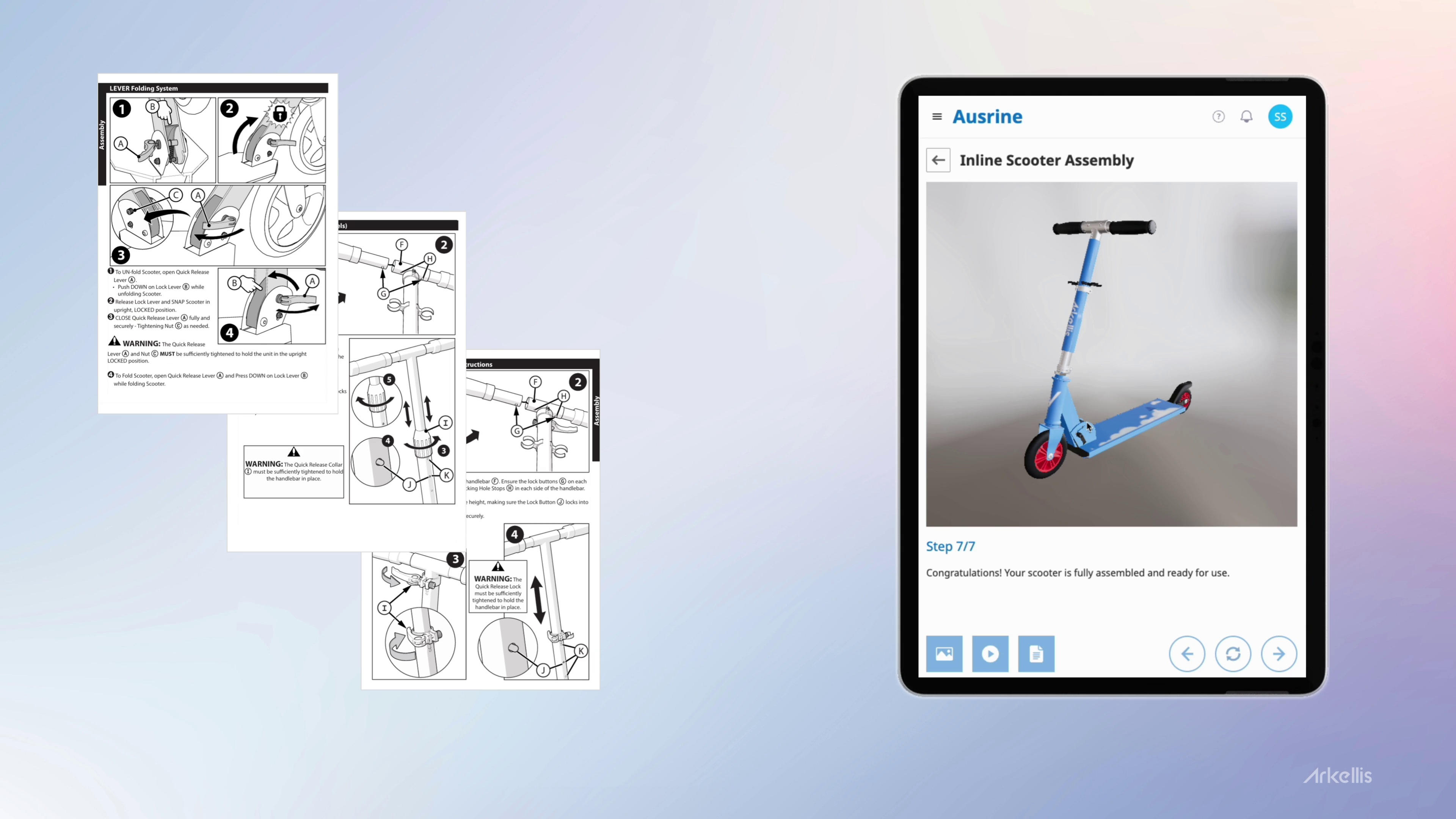
The objective is not to make instructions more visually impressive. It is to reduce the amount of spatial interpretation the user has to perform before completing a physical task.
From Viewing Instructions to Interacting with the Product
Traditional assembly instructions largely follow this pattern: Look → Interpret → Act
Interactive procedures introduce a different model: Inspect → Understand → Act
Interactive 3D helps reduce one source of avoidable uncertainty in assembly: having to infer a three-dimensional relationship from a fixed representation. Instead of relying on a single illustration, the customer can inspect how components relate to one another before performing the assembly step.
The quality of the final assembly still depends on factors such as the product design, the procedure itself, the user's actions, and the quality of the authored content. But by reducing the amount of spatial interpretation required, interactive guidance can make complex assembly steps easier to understand and follow with greater confidence.
From Document to Interactive Procedures
The next question is practical: How can manufacturers create these experiences without treating every procedure as a bespoke software-development project?
Many manufacturers already have 3D product assets and established assembly procedures. The challenge is turning that information into an experience that customers can actually follow.
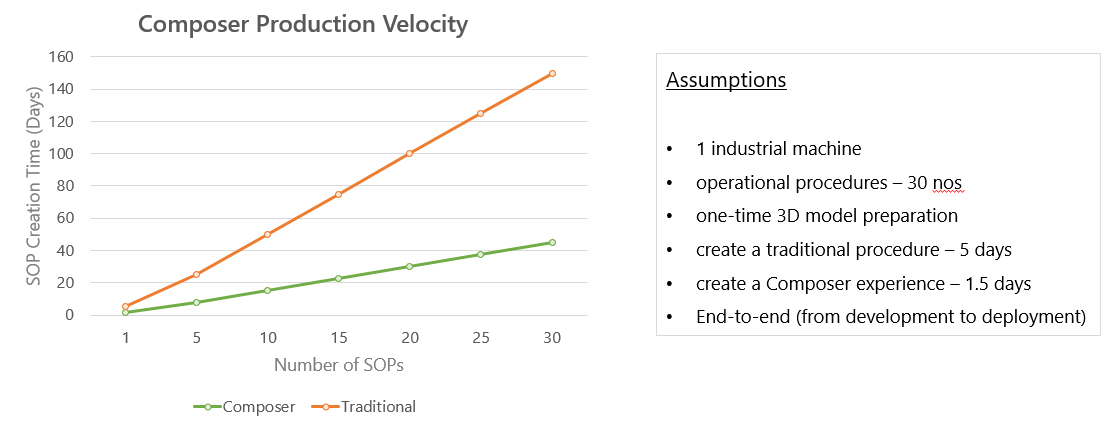
Ausrine Composer fits into this authoring workflow. It enables manufacturers to transform existing product content into guided interactive 3D procedures without treating each procedure as a custom software-development project. As a low-code/no-code authoring environment, Composer makes it practical to create, update, and publish these procedures at scale.
In an internal workflow comparison, comparable interactive procedures have been authored in approximately 1-1.5 days using Composer, compared with approximately 1-1.5 weeks in a traditional development workflow. Actual effort depends on factors such as procedure complexity and the readiness of the source content.
Connecting the Physical Product to Its Digital Guidance
Creating the experience is only half of the problem. The other half is making it available at the moment it is needed.
The manufacturer can place a QR code on the product packaging or inside the assembly manual. The customer scans the code and immediately opens the browser-based interactive procedure.
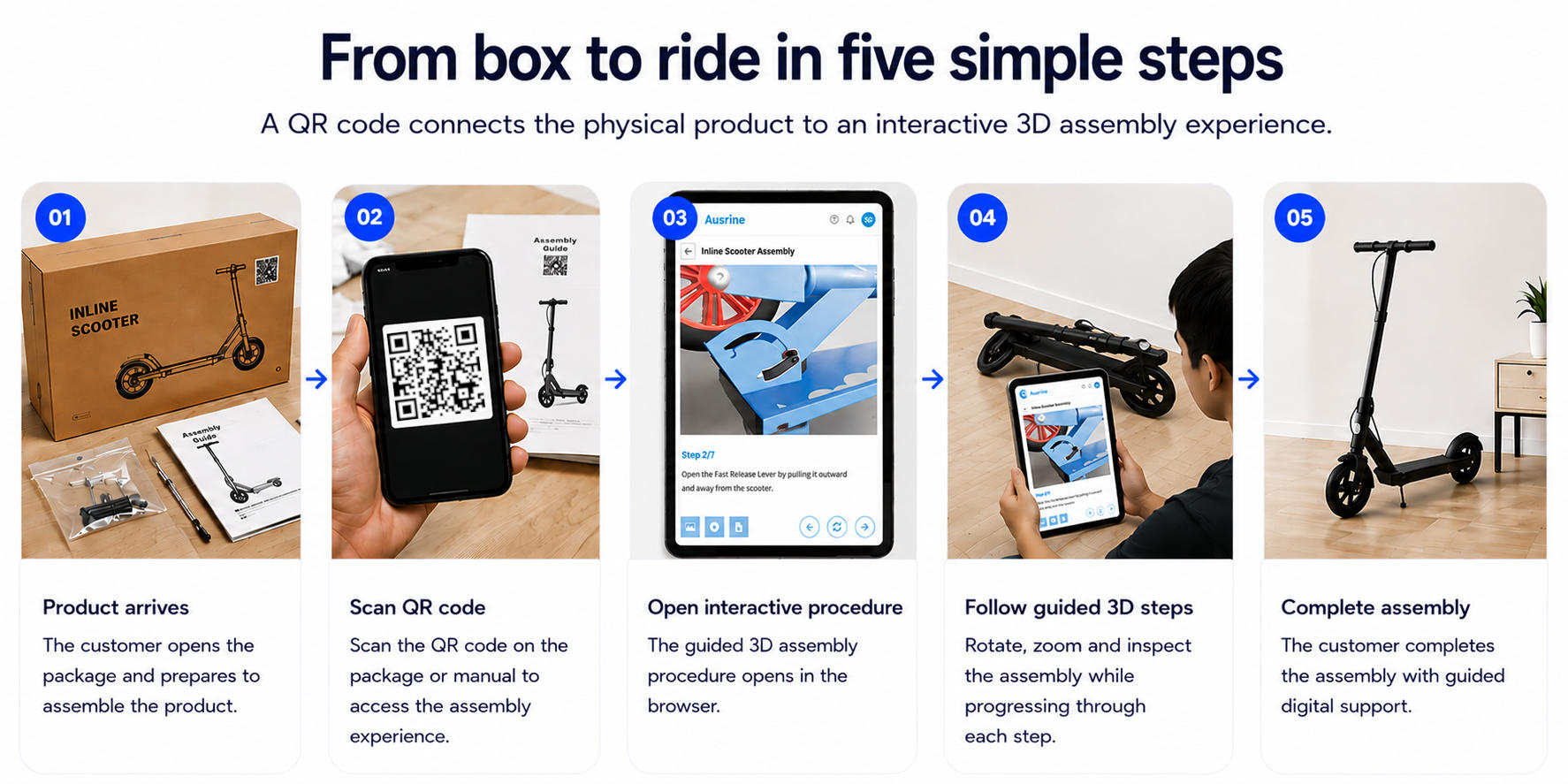
Disclaimer: Illustrative image above generated using AI to represent the product assembly experience discussed in this article.
The customer does not need to understand the underlying technology. They simply need clear, guided instructions for the next assembly step.
This is the distinction between technology adoption and technology exposure: sophisticated technology behind the experience, simple interaction for the customer.
One Procedure, Multiple Audiences
The larger opportunity begins when manufacturers stop treating an assembly procedure as a document created for one moment and one audience.
A customer, a dealer, a service technician, and a training team do not need the same experience. They have different responsibilities, permissions, safety requirements, and levels of technical detail. But they do not necessarily need completely separate procedural content.
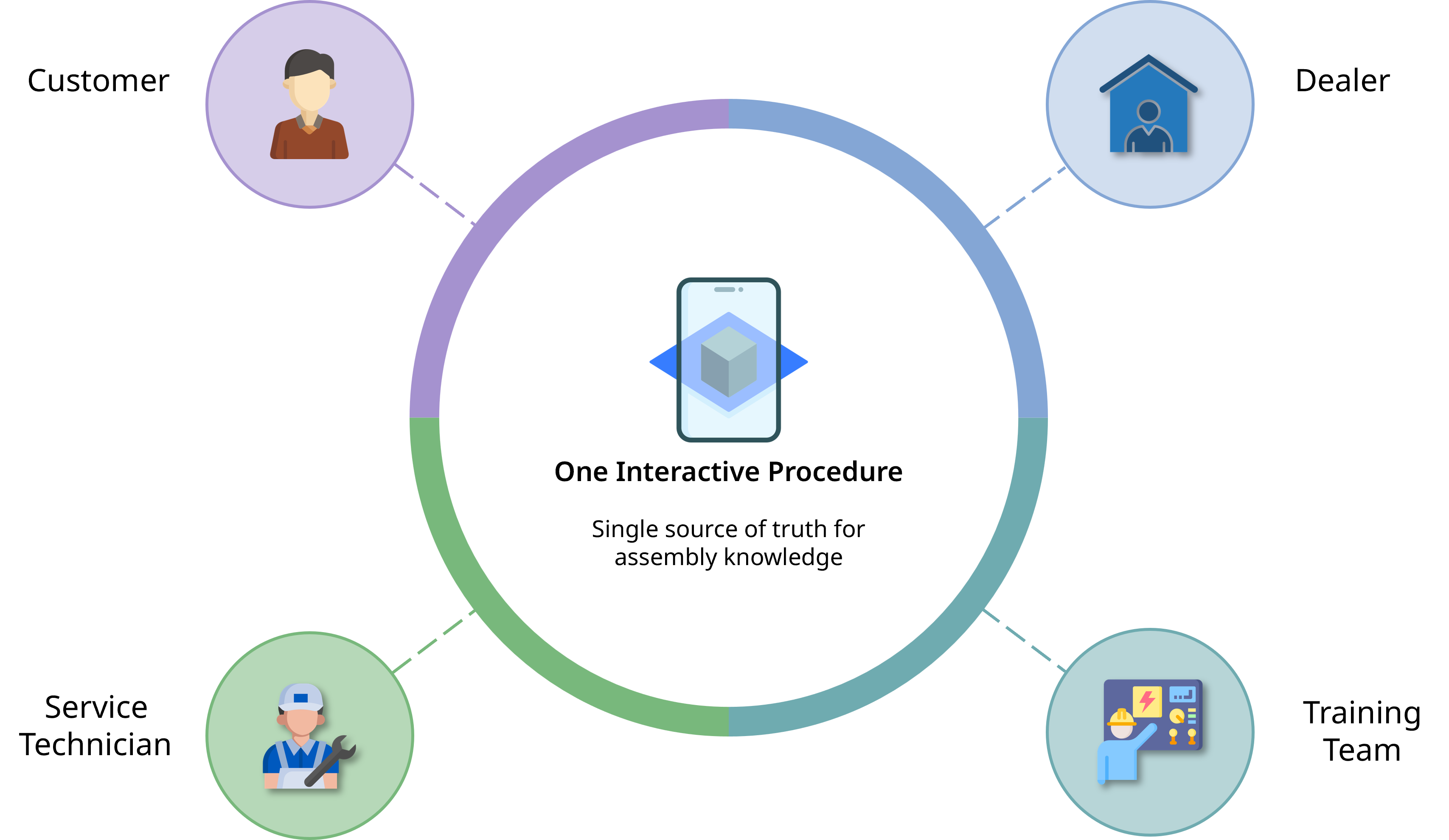
Instead of treating procedures as documents that are created, published, and forgotten, manufacturers can think of them as reusable digital procedural assets.
The same procedural foundation can support customer assembly guidance, dealer training, service reference, and learning and enablement while being adapted for each audience.
From Instructions to Feedback
A printed manual ends its job once it is published. An interactive procedure can continue providing signals about how users interact with the assembly process.
Imagine a 15-step assembly procedure in which users repeatedly return to steps 8 and 9. That does not automatically mean those steps are poorly designed. It is an interaction signal that something deserves closer investigation.
The underlying cause could be an unclear instruction, a difficult component, an unintuitive sequence, product geometry, or lack of user familiarity.
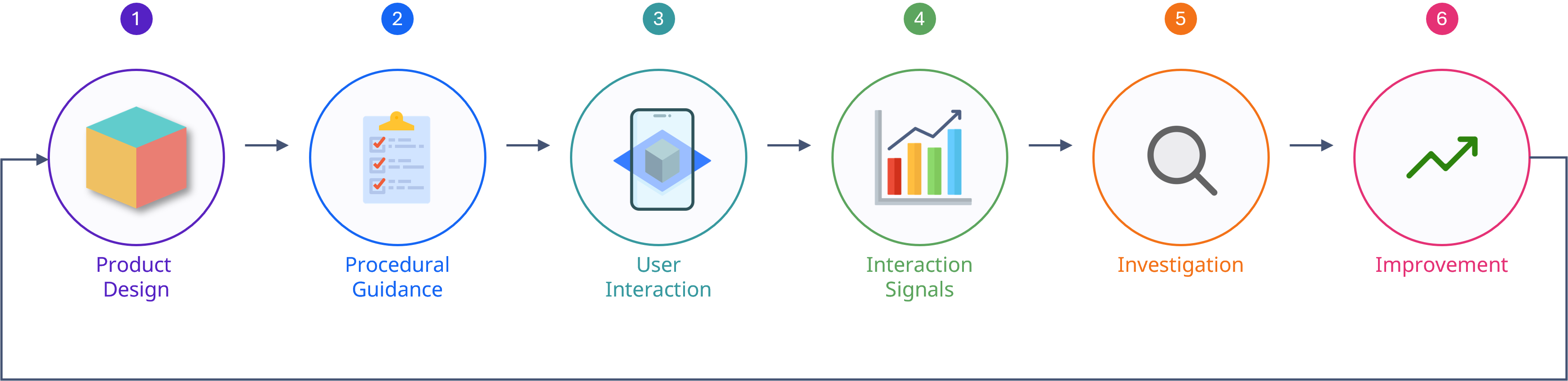
The important distinction is that interaction data should be treated as a signal for investigation, not an automatic diagnosis. Used responsibly, these signals can help engineering, service, and documentation teams decide where to refine products, procedures, or training.
Where Manufacturers Should Start
The opportunity is not to replace every PDF with interactive 3D guidance. Instead, start where the current experience creates measurable friction.
Ask five questions:
- Where do customers struggle?
- Where does spatial complexity matter?
- Is the procedure used frequently enough?
- Can the procedure be reused across audiences?
- Can success be measured?
The question is therefore not - "Where can we use 3D?". It is
"Where does the current way of communicating a physical task create enough friction that an interactive experience could make a meaningful difference?"
The Next Step Beyond the Manual
The evolution of product guidance is not simply PDF → 3D. It is a shift from static documentation toward interactive, reusable, and potentially measurable digital experiences.
For manufacturers, that means rethinking one often-overlooked moment in the product lifecycle: when a customer opens the box and turns a collection of components into a working product.
When a physical task depends on spatial understanding, the most useful instruction may not be something the customer reads. It may be something the customer can interact with.
Ausrine Composer is one practical way to author and publish these interactive experiences from existing product content. But the broader idea goes beyond any single platform.
The starting point does not need to be a large transformation program. It can be as simple as taking one existing assembly procedure and asking -
What would this experience look like if the customer could interact with the product instead of interpreting a picture of it?
Is your assembly process creating unnecessary friction?
See how interactive 3D procedures can reduce assembly friction, improve customer confidence, and transform product experience.